What Dubai’s New Property Resale Rule Means For UAE Residents And Expats
- Feb 21, 2026
- News
- 319
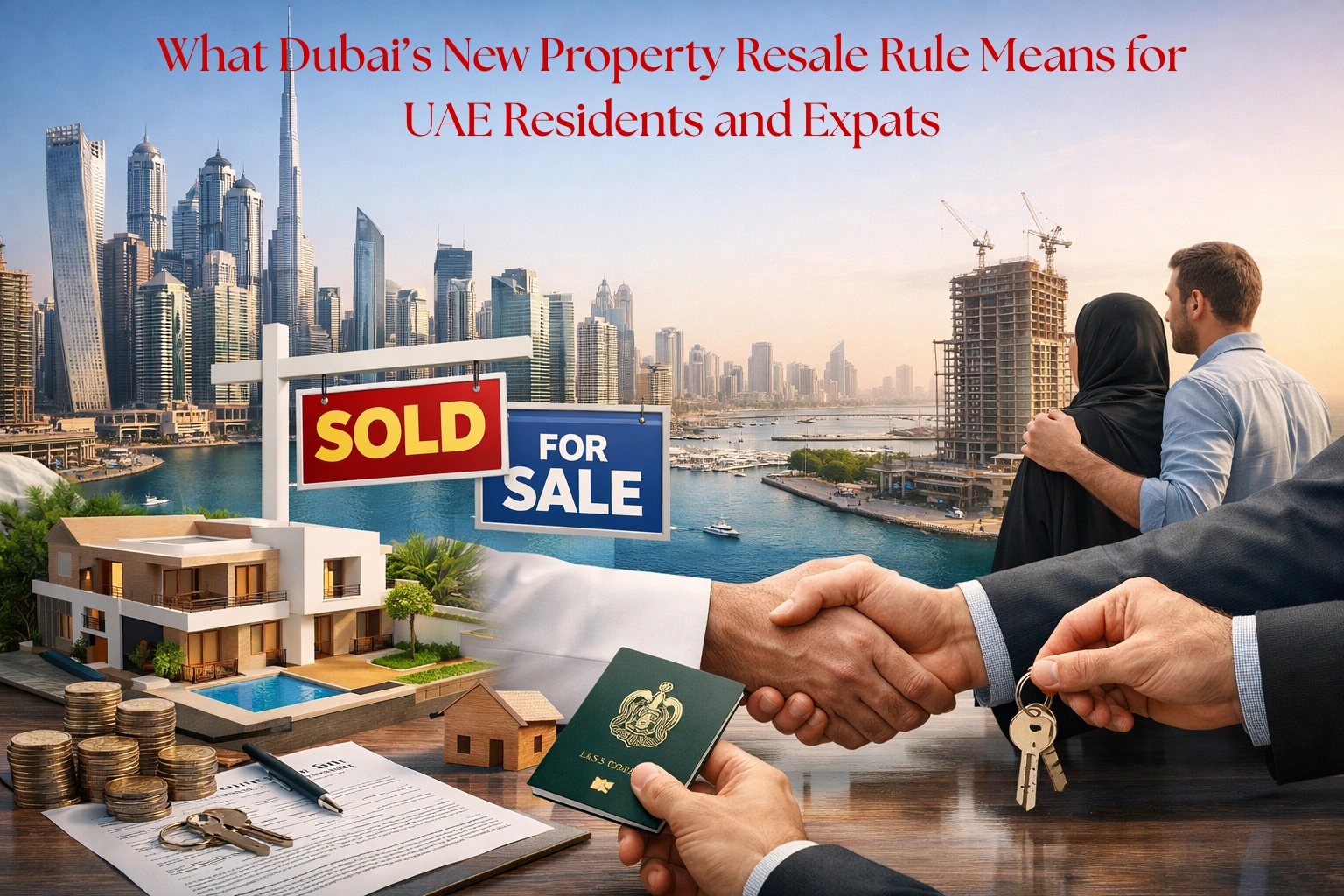
Dubai Real Estate, has taken another bold step to redefine the ways in which individuals invest in properties. The Dubai Land Department (DLD) is now officially moving on to the next step of its Dubai property tokenisation project. Moreover, investors can now sell their shares of property, dubbed as “tokenised” starting February 20.
But what does this really imply for UAE residents and expatriates? Is this really a significant change for the UAE real estate industry, or simply another technology gimmick? Let’s break it down in simple terms.
What Is Real Estate Tokenisation?
Fundamentally, tokenisation of a real estate asset involves dividing it into small shares instead of selling it as a whole. Each share is referred to by the name "token," and each token represents a portion of ownership of a given property. The tokens are electronically documented and tied to official title deeds. Thus, if you own a token, you essentially own part of that property.
Think of this as follows: instead of buying an apartment or a villa, you can now own a piece of it. This allows property investments to be made available to individuals who may not have the funds to purchase entire properties for sale in Dubai.
What Changed This Week?
The city has been piloting this idea since March last year through the REES Real Estate Innovation Initiative. During the initial phase, the authorities concentrated on ensuring the system works properly and within effective legislation on property ownership.
Now, the project is in its second phase. The major change: Investors who own existing property tokens can now sell them in a secondary market. The sale of existing property tokens began on February 20. This is the first time the system has ventured out of test mode and into live market participation.
Why Is Resale So Important?
It is resale that gives any investment flexibility. Without the resale option, investors in the tokens would have to hold them until the property itself is sold or the project is completed. That might take a number of years.
With resale now permitted, investors can now:
- Sell their shares if they need liquidity
- Adjust the Investment Portfolio
- Capitalize on new opportunities
According to the Dubai Land Department, as many as 7.8 million real estate tokens will be tradable in this phase. This brings liquidity into property investment-something that traditional real estate does not always offer so easily.
How Is This Different from Traditional Property Buying?
Generally, purchasing a property in Dubai entails:
- A large upfront payment
- Long-term financial commitment
- Extensive paperwork
- Limited exit options
Tokenization alters that situation. In the current scenario, it is not essential for the investors to bring in hundreds of thousands or even millions of Dirhams into the business.
This creates opportunities for:
- First-time investors
- Residents who cannot afford full units
- Individuals who prefer diversification instead of investing their savings in one property.
Basically, it reduces the entry cost and increases the degree of flexibility.
Is It Safe and Regulated?
The common concern is that this works like some sort of unregulated crypto project. No, it is not. It is an initiative officially developed and regulated by the Dubai Land Department, but under regulatory oversight from VARA.
Deals can only be done on licensed exchanges. Regulators have consciously kept the launch in a limited scale to closely watch:
- Pricing behavior
- Trading activity
- Investor demand
- Market stability
This controlled approach provides for transparency and investor protection while testing how effective the secondary market is. The world over, asset tokenization is increasingly recognized as one of the major innovations in finance. The World Economic Forum has identified tokenization as one of the major trends marking the future of investment markets.
How Does this New Rule Effect?
For Everyday Residents
- Lower-cost access to property investment in Dubai
- The ability to buy and sell lesser stakes
- More flexibility compared to traditional ownership
For Expats
Most of the expatriates who reside in Dubai feel uneasy investing at full capacity because of the long-term involvement or for financial reasons. Tokenization creates an opportunity for investors to invest without the need for full ownership.
For the Real Estate Market
- Increased liquidity
- Greater transparency with digital records
- Broader Investor Participation
For Dubai
Dubai has designed itself as a global real estate leader and a technology leader. By linking ownership of property with technology innovation, Dubai forms its reputation as a leader all over the world. The move also fits in with the long-term economic and urban planning strategies.
Will This Replace Traditional Property Ownership?
No. This means that buying full apartments, villas, and land will happen as it always has. Tokenization is designed as an additive option, not a replacement. The Dubai Land Department has, however, made it clear that this is a long-term initiative that will expand gradually based on market performance and regulatory approvals.
What Happens Next?
The authorities will keenly observe the resale market’s performance in the coming months. They will pay attention to:
- How easily tokens are traded
- Price movements
- Investor interest
- Overall market stability
Depending on the results: Dubai may:
- Expand participation
- Add more approved trading platforms
- Introduction of new categories of tokenized real estate assets
For now, the focus is still on controlled growth and monitoring.
A Long-Term Vision for Real Estate
Dubai’s latest move forms part of a broader vision of modernizing the property market. The vision is focused on improving transparency and efficiency and stimulating growth in the property market through the use of technology and supporting sustainability.
The key takeaway for expats and locals alike is:
Dubai real estate investment is now not reserved only for people who can buy the whole property. In the long term, owning a small share of Dubai’s real estate market may be as easy as buying stocks, choosing the degree of freedom and accessibility that suits you best. However, if the resale market operates efficiently, then this could signal the beginning of an even more dynamic and inclusive real estate market in the UAE.
ALSO READ
- Dubai’s New Property Resale Framework 2026: A Comprehensive Professional Overview For UAE Residents And Expatriates
- Dubai To Open Secondary Market For Tokenized Real Estate This Month: A New Chapter In Digital Property Investment
- Understanding Service Charges In Dubai A Complete Guide For Property Buyers
Popular Categories
Popular Posts



Top 5 Areas for Rental Yield In 2026 In Dubai