Dubai To Open Secondary Market For Tokenized Real Estate This Month: A New Chapter In Digital Property Investment
- Feb 13, 2026
- News
- 1,552
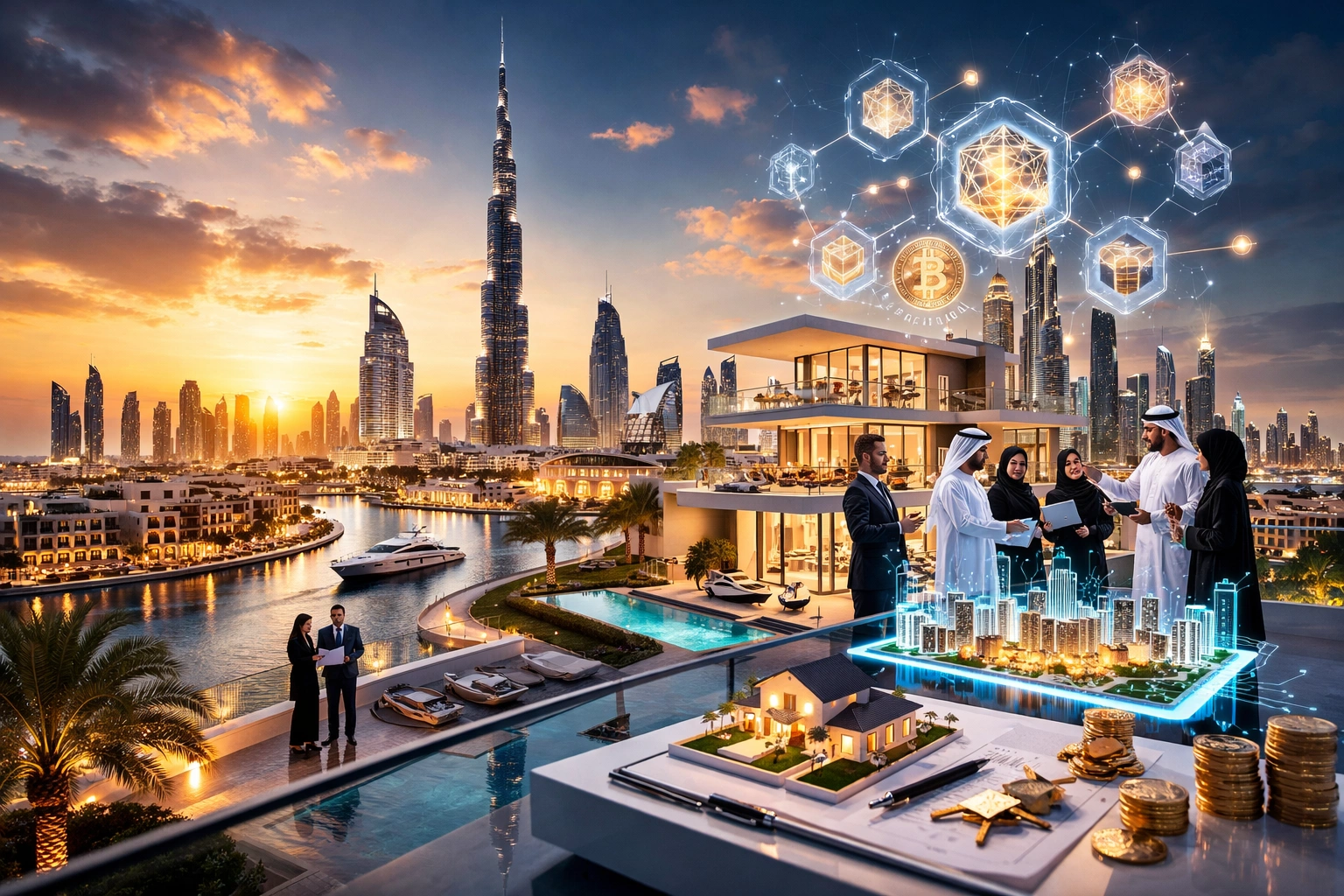
Dubai is once again redefining the future of real estate. The Dubai Land Department has announced the formal launch of Phase II of its Real Estate Tokenisation Project, one of the major milestones in the digital transformation journey of the emirate. Resale activity will be opened starting February 20 in a newly activated secondary market for tokenized real estate.
This is much more than a revision in policy. This marks the transition from mere experimentation to actual application, moving the project beyond its pilot phase into a more structured and operational one. More importantly, it reinforces Dubai’s commitment to building a real estate market that is smarter, more transparent, and ready for a technology-driven future.
Let's delve into what the development means, how it works, and why it might shape the next era of property investment in the UAE.
From Pilot to Operational Stage: What Has Changed?
The Real Estate Tokenisation Project was initially presented to the market in March, under the “REES Real Estate Innovation Initiative.” In the initial phase of the real estate tokenization project pilot, the Dubai Land Department worked very closely with the Virtual Assets Regulatory Authority (VARA) and other strategic partners to test the foundations on a legal and technical level.
That is, the pilot phase was undertaken as a way of finding the answer to one of the following central questions: Is it conceivable that property rights can be divided up and owned as digital tokens, while also safeguarding investors’ rights?
The authorities also tested the possibility of linking tokens to real estate more directly with the official deeds for the properties, which ensured that the ownership of tokens did not occur in isolation. This was done over a series of months. With the launch of Phase II, Dubai is so confident with the systems in place that it is allowing a limited resale market. This is a big step forward, since resale creates liquidity, and liquidity changes the nature of the item.
Understanding Real Estate Tokenisation
In order to realize the importance of this development, it is essential to understand what real estate tokenisation really is. In traditional understanding, an individual who purchases property acquires ownership of the whole unit, whether that be an apartment, villa, or office space. This ownership is recorded under the individual’s name in the land registry.
Tokenisation changes this model. Instead of selling the property as an entire package, the property may be subdivided into several smaller digital units; these digital units are referred to as "tokens." These tokens are digitally recorded but are related to the traditional title deed. This implies that investors can have partial ownership of a given property, as opposed to the whole property.
For instance, rather than requiring a huge investment of dirhams to purchase a building, one may be able to own a portion of it in the form of tokens. This breaks down a barrier to entry, making it easier for the majority of the population to participate.
The Launch of the Secondary Market
Phase II is directed particularly to resales in the secondary market. There are approximately 7.8 million real estate tokens available for resale within this controlled pilot environment. Existing investors who have held the tokens may now resell them to other investors. This is a very managed approach. It has been well emphasized that the process of resale will be conducted within a well-structured mechanism aiming at:
- Assess market efficiency
- Test operational readiness
- Enhance transparency and governance
- Protect investor rights
- Ensure transaction integrity
In other words, no rapid development, but growth. Through these observations, which involve the trade of tokens, the volatility of prices, and the behavior of investors, meaningful data will be collected before embarking on further broader markets.
A Carefully Planned Transition Toward Expansion
The Dubai Land Department has made it clear that this phase is being implemented gradually. Instead of a rush towards scaling, DLD is using a data-based process. Every step will be carefully evaluated with appropriate coordination with concerned regulatory authorities, concomitantly aligning with legislative frameworks.
This measured approach has two functions:
- It enhances confidence among investors by ensuring transparency.
- It offers information to regulators that will influence their decisions in the future.
The strategy evidences maturity on the level of policymaking. Instead of crafting a sweeping initiative and then refining it, Dubai is establishing its digital real estate environment piece by piece. This incremental approach is particularly significant when new technologies are being introduced in industries that are subject to strict regulation, such as property ownership.
Strategic Alignment with Dubai's Long-Term Vision
The Real Estate Tokenisation project is not a one-off initiative, especially as many of its components match national- or emirate-level mega-plans.
Dubai Real Estate Sector Strategy 2033
This project is in alignment with the Dubai Real Estate Sector Strategy 2033, whose objectives are:
- Strengthening
- Enhancing
- Enabling technological innovation
- Delivering a Seamless Investment Experience
With the integration of tokenisation, Dubai is aiming to create a more inclusive property market. When more people participate, it can lead to more market activity, which will stimulate a healthy economy.
UAE Vision 2071
The initiative is also consistent with the UAE vision 2071, which seeks to make the UAE a world leader in innovation and the sustainable development of the economy. Tokenisation, meanwhile, is part of the country's broader aspirations in terms of technological advancements across industries, which would ensure long-term competitiveness.
Dubai Urban Plan 2040
It also serves the Dubai Urban Plan 2040, which emphasizes:
- Smart Urban Development
- Sustainable growth
- Enhanced quality of life
Digital real estate can help manage the rapid growth of cities efficiently by increasing transparency as well as effective and accurate ownership, as well as streamlining investments.
Why This Matters for Investors
While the existence of a secondary market will alter the nature of real estate investment Dubai. Historically, it has been thought of as a relatively illiquid investment. It takes time to dispose of property, which includes many processes. With the presence of tokenization and resale options, fractional ownership exhibits greater flexibility.
For investors, this means:
- Potentially faster exit options
- Greater portfolio diversification
- Lower capital requirements
- Increased accessibility
However, it is also important to note that this is still a controlled environment. The resale system is under close observation, and it will depend on how it performs.
Building an Integrated Digital Real Estate Ecosystem
Dubai Land Department has announced that cooperation will also continue in the coming phases with VARA and its technical partners. Future priorities include:
• Refining the rules and implementing
• Enhancing technical infrastructure
• Evaluating additional trading platforms
• Studying the possibility of expansion of participation
All expansions will be in line with the gradual approach and subject to approval and assessment. This implies that tokenisation is not an experiment but an essential part of the digital real estate roadmap in Dubai.
Reinforcing Dubai's Global Competitiveness
Dubai has always been regarded as a testing ground for innovation around the world. In all aspects, ranging from implementing blockchain technology to smart cities, Dubai is keen to incorporate innovation in various domains. The Real Estate Tokenisation. The project helps to further reinforce this reputation.
By taking a leading position in the region as one of the first authorities in real estate registration to approve tokenisation in a regulated environment, Dubai sets itself apart as a pioneer in digital property ownership. This can make it more attractive to foreign investors who prefer innovative and transparent markets.
Balancing Innovation with Regulation
Clearly, one of the most striking aspects of this initiative is its emphasis on regulation. Unlike unregulated digital asset platforms used on other markets, the system used in Dubai incorporates tokenization through the official land registry system. This integration ensures that:
- Ownership records remain legally recognizable
- Transactions take place on approved platforms
- Investor protections are embedded in the system
Through a balancing act of innovation and legislation, Dubai maintains system risk while encouraging the use of new technologies.
A Long-Term Strategic Commitment
The Dubai Land Department again emphasized that the Real Estate Tokenisation Project is a long-term strategic initiative. Its purpose is not to replace conventional property transactions, but to add another option to those that are currently available. As the secondary market continues to develop and more operational data is available, Dubai may extend and expand the categories of tokenized assets. However, each step will be informed by data and an assessment approach.
Looking Ahead
The next few months will be critical. Regulators will keep an eye on:
- Volumes of trading
- Stability of prices
- Demand from investors
- Effectiveness of operations
The results will dictate the future expansion's pace and scope. If this initiative is successful, it may signal the start of a more dynamic and inclusive real estate market where technology improves transparency and ownership becomes more flexible.
Shaping the Future of Property Investment
Dubai's choice to open a secondary market for tokenized real estate goes beyond just a technical improvement. It shows a larger goal of creating a smart, sustainable, and competitive property sector on a global scale. By moving from pilot tests to controlled resale activities, Dubai is proving that innovation and regulation can work together. The Real Estate Tokenisation Project is a clear example of forward-thinking governance that focuses on protecting investors, ensuring market stability, and promoting long-term economic growth.
February 20 marks the start of secondary market activity, and the world will be watching closely. If managed well, this initiative could change how property ownership is structured, traded, and experienced—not only in Dubai but also in global markets in the future.
ALSO READ
- Real Estate Tokenization in Dubai 2025
- The 10% Milestone: Why February 2026 is the Last Chance for 'Pre-Metro' Pricing on the Blue Line
- The Golden Visa 2.0: How Recent Changes Affect Property Owners
Popular Categories
Popular Posts



Top 5 Areas for Rental Yield In 2026 In Dubai