Dubai’s Property Market Enters a Maturity Phase — What That Means
- Dec 29, 2025
- News
- 466
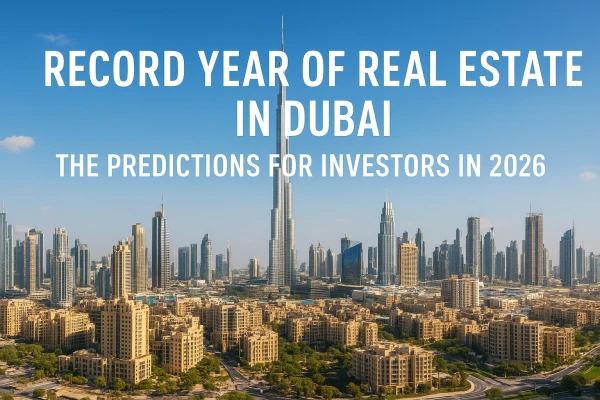
Long after several years of rapid expansion, in 2025, Dubai real estate sector is beginning to show clear structural maturity. Although transaction volumes are still strong historically, there has been a significant slowdown in price growth and evolution of investor attitudes, coupled with the implementation of strategic regulation that solidifies long-term market stability.

Current Signs of Market Maturity in Dubai
Recent analysis by many international consultancies such as Knight Frank and CBRE indicates that the residential real estate market in Dubai is entering a period of stabilization following a period of very rapid growth. Transaction values remain high and therefore the monthly growth of prices has returned to a more realistic pace of price growth that emphasise sustainability rather than the pattern of extreme price growth we experienced previously.
In addition, the Dubai real estate market is characterised increasingly by disciplined pricing, reasonable yield expectations, and a pattern of selective buyer demand across the different segments of the real estate industry.
Signs of A Maturing Real Estate Market
- Growth in Prices: There has been a transition away from large quarterly price growths to smaller price growths with steady increases
- Less Speculative Buying: The amount of short-term selling has increased significantly, and more buyers are now considering longer term ownership instead
- Supply Pipeline Is Balanced: Recent launches reflect what is actually wanted by the end-user rather than their expectations.
- Regulatory Oversight: Escrow controls and transparency of transactions are getting better and better
These signs, when viewed together will build greater confidence in Dubai properties as a viable long-term investment for buyers & investors in the region.
Changing Behaviour of Buyers & Investors
- Buyers Are Focusing on Long-Term Holding: Buyers today are more focused on generating cash flow and preserving their capital
- Buyers Want Quality over Quantity: The type of property that buyers are looking for are properties that have had good planning and have a solid infrastructure
- New Segmented Demand: The divide between Prime and Mid-Market properties are now strong enough to be classed as Sub-Market Investments
Changing Buyer and Investor behaviours will support successful Dubai real estate investment strategies based on fundamentals rather than momentum of a short cycle.
Indicators of Market Maturity at the Area Level
The maturity of a market is much easier to see in mature neighbourhoods (e.g., Downtown Dubai, Dubai Hills Estate, Palm Jumeirah and Business Bay) than it is in new/expanding area(s) (e.g., Dubai Land, Jumeirah Village Circle (JVC), etc.) because of the consistency of rental demand, the existence of a range of prices for both Dubai properties for sale and renting homes, and no speculative selling activity. The new areas have had a tendency to be fully absorbed into the marketplace, resulting in stable property prices and/or stable rental incomes.
On the whole, the patterns exhibited by both established and developing neighbourhoods demonstrate that Dubai's growth is both segmented based upon sub-market and via geographic locations.
How Developers and Policies Support Market Maturity
Major developers such as Dubai properties have developed a phased-release process of real estate product to respond to the maturity of the market and also provide for an efficient way to rehabilitate existing infrastructure in a sustainable manner. In addition, changes in the visa regulatory regime and diversification of the economy support an increase in the Dubai population, which then provides for continued market and demand for real estate.
Therefore, property investment in Dubai is becoming more structured with allocated capital as opposed to speculative trading.
Implications of this Evolution for Buyers and Sellers
- More standardised price benchmarks & lower price volatility for buyers
- Increased data driven decision making by sellers
- Consistent modelling of returns for investors based on yield & occupancy.
- Differentiation will continue to be key to developers based upon quality, location & long term livability.
Current search trends for properties for sale in Dubai indicate that buyers are entering the market with defined purposes & a longer term perspective.
Long Term Significance to the Dubai Real Estate Market
Market maturity does not equate to market stagnation, but instead represents a sustainable market and resilience in institutional confidence and global synergy. Sustained demand for residential properties will continue as Dubai attracts international residents, entrepreneurs and investment capital.
When evaluating properties for sale, or specialty leasing segments such as furnished villas for rent in Dubai, participants are operating in a market that is structured, transparent, and has a long term perspective rather than a cyclical speculative outlook.
Popular Categories
Popular Posts


Top 5 Areas for Rental Yield In 2026 In Dubai