Dubai’s Air Taxi Revolution: The Future of Urban Flight Is Here
- Nov 26, 2025
- News
- 1,199
Dubai has always been innovative when it comes to futuristic technologies, and this week we witnessed an incredible milestone in the history of commercial taxi service with the introduction of air taxis by Dubai. As high-speed and low-emission vehicles, the air taxi will serve as a means of eliminating congestion while providing rapid transportation services between major areas of Dubai. Overall, this development will help to enhance Dubai's position as the global leader in smart city planning as well as support the continued emergence of a lifestyle-based economy within the Dubai real estate industry.
In January 2020, the Dubai Road and Transport Authority (RTA) signed a number of agreements with Joby Aviation, Skyports Infrastructure, and the Dubai Civil Aviation Authority (DCAA) regarding the first phase of the new air taxi project. Construction on the initial vertiport prototypes commenced in 2024, with Dubai International Airport serving as the launch site.
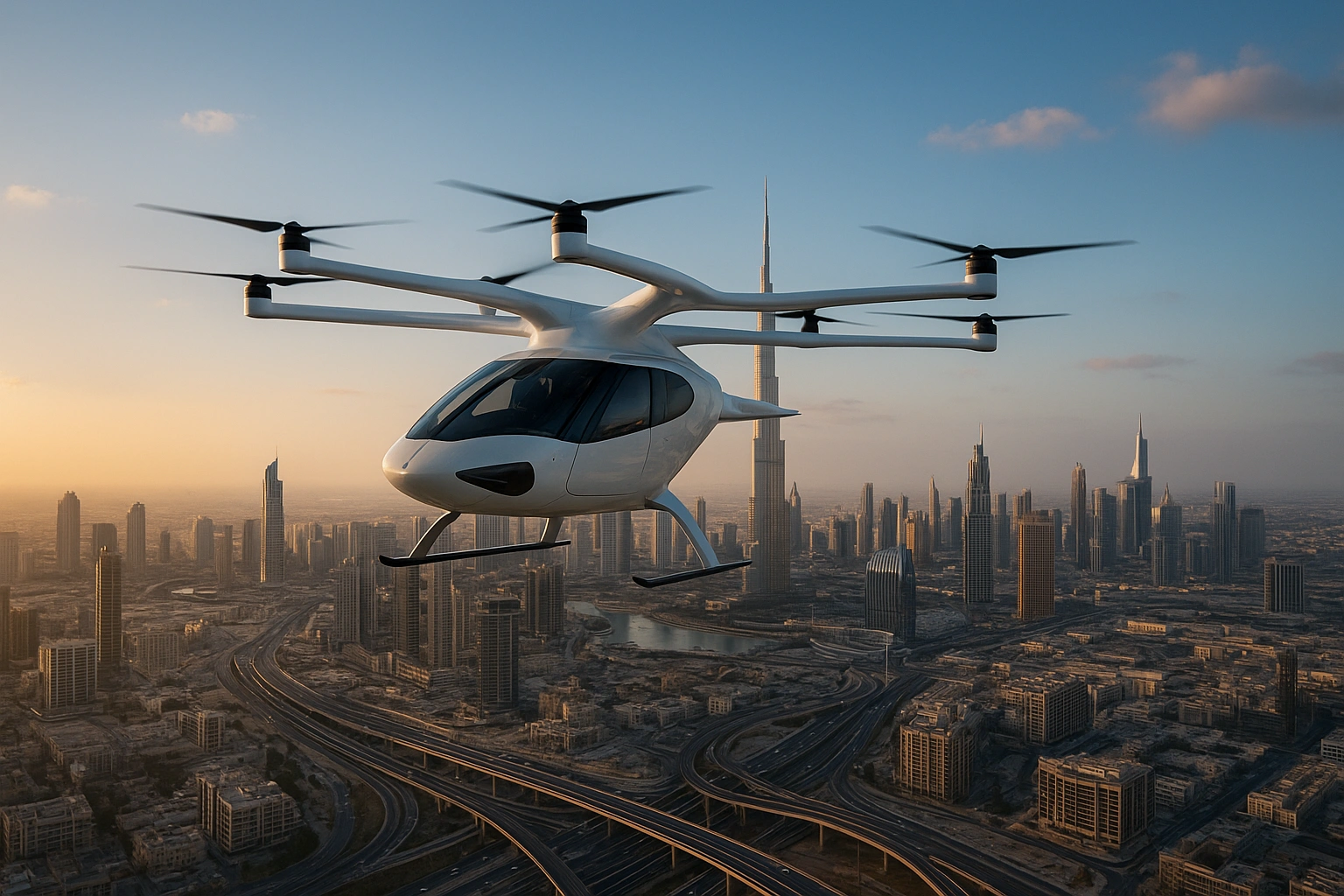
What are Dubai Air Taxis?
Dubai's air taxi system consists of eVTOL (electric Vertical Take Off and Landing) aircraft that lift from compact vertiports. They can operate quietly, cleanly and serviceably over traffic in a matter of minutes. These eVTOL aircraft were built in partnership with leading industries such as Joby Aviation (California) and Skyports (UK), and are built to transport 4–5 passengers safely at a maximum speed of approximately 300–320 km/h and can have a maximum range (i.e., distance between take-off and landing) of about 160 km.
This system of air taxis will provide the potential not only for travel for visitors and companies, but also for investors considering a long-term property investment in Dubai and those interested in investing in real estate close to future vertiport sites. Dubai hopes to have air taxi services fully operational by 2026, with the first pilot test flights already confirmed and approved by the RTA (Roads and Transport Authority) in January 2024.
Newly Announced Vertiport Locations in Dubai
Dubai has on the drawing board a complete grid of vertical ports (mini airports) throughout the city that will support the operations of Electric Vertical Take Off & Land (eVTOL) aircraft. The following locations have been confirmed by the Roads and Transport Authority (RTA) in Dubai and are in the design development process:
- Downtown, Dubai (Near Burj Khalifa): Where the eVTOL will connect with Metro, Tourism Route, and CBD routes
- Dubai Marina: A densely populated, multi-family residential area with a need for a robust mobility solution
- Palm Jumeirah: The heart of the luxury Resort And Residential Community in Dubai
- DXB International Airport (Terminal 3): for International Transfers
- Dubai South (Near Al Maktoum International Airport): A future Global Air Transport Hub
As a result of the increased vertical transport and aerial connections, these areas are expected to emerge as the most desirable areas within the Dubai real estate market.
How Air Taxis Benefit Residents of Dubai and Local Businesses
- Quick Travel
Air taxi services turn an average 40-60 minute car ride into an 8-12 minute hop. In fact, early adopters can expect to see an average travel time of just 10 minutes from Dubai International Airport (DXB) to Palm Jumeirah. - Zero-Emission Transportation
eVTOLs create no emissions, which supports Dubai's sustainability initiative and solidifies Dubai's leadership position in global environmental issues. eVTOLs support the implementation of Dubai's Net Zero 2050 Strategy. - Less Road Congestion
By moving high-value, time-sensitive travel into the air, traffic flow on major highways will be less congested than it was before the advent of eVTOL technology. - Greater Appeal as a Tourist Destination
Tourists who visit will be able to travel within minutes to some of Dubai's finest attractions, adding luxury and aerial sightseeing to their experience. By using eVTOL technology, Dubai will continue to position itself as a future-ready city resulting in boosting investor confidence and demand for best real estate in Dubai.
Air Taxi vs. Traditional Transportation: A Comparison
| Feature | Air Taxi (eVTOL) | Traditional Transportation |
| Average Speed | 250-300 km/h | 60-100 km/h |
| Travel Time | 5-15 Minutes | 30-60+ Minutes |
| Traffic Impact | Zero | High |
| Environmental Impact | Zero Emission | Emits Fumes |
| Noise Level | Very Low (Electric) | Moderate to High |
| Cost (Initial Phase) | Higher | Moderate |
| Comfort Level | Premium/Private | Standard |
| Infrastructure Required | Vertiports & Chargers | Roads, Metro Stations, Bus Stations |
| Operational Flexibility | Limited Early Routes | Extensive Citywide Routes |
How Air Taxis Support Dubai's Smart City Vision
Dubai's goal is to achieve 25% of its transport being autonomous by 2030, and the use of air taxis will play a major role in meeting that goal. By providing artificial intelligence for navigation, digital traffic management systems, and future-proof vertiport design, Dubai is positioning itself to be a leader in aviation innovation globally.
In addition, the future of air taxi transportation will improve the lifestyle value of communities developed by Dubai Properties through Smart Districts and Transits integrated zones.
Dubai's Future Sky Mobility Has Only Just Begun
By 2026 the first commercial flights of eVTOL (electric vertical take-off and landing) powered air taxis will commence operations, representing the first worldwide eVTOL air taxi service. Demand for property located close to these high connectivity aerial corridors will shift toward high density urban areas, creating an increased demand for new real estate investment to be built that will accommodate customers living within the city who will have access to these new mobility systems in the near future.
Popular Categories
Popular Posts




Top 5 Areas for Rental Yield In 2026 In Dubai